


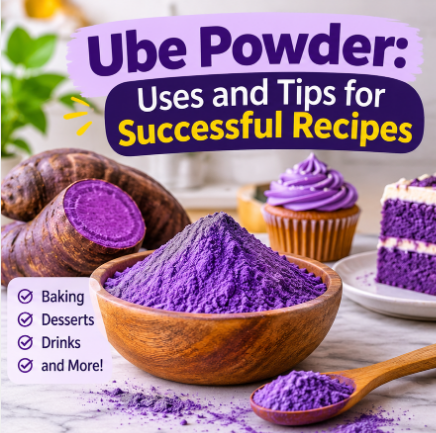
Ube powder brings the distinctive flavor of Filipino purple yam into home kitchens without the need to peel, boil, or mash fresh tubers. Its naturally purple color and gently sweet, earthy taste make it an appealing ingredient for cakes, pancakes, cookies, drinks, and traditional desserts. Yet successful results depend on understanding how this powdered ingredient behaves when mixed with liquids, heated, or combined with other ingredients.
Unlike artificial purple food coloring, natural ube powder comes from purple yam, known botanically as Dioscorea alata. Depending on how it is processed, the powder can retain some of the nutrients and pigments found in the original vegetable. Its flavor is subtle, with notes that may remind you of vanilla, nuts, and sweet potato. Think of it as a quiet background note that gives desserts their character without overwhelming the other ingredients.
Working with dehydrated purple yam requires a little technique. Adding too much powder can create a dense, dry texture, while using too little may produce barely noticeable flavor. Proper hydration, balanced sweetness, and the right cooking temperature make a remarkable difference. The specific characteristics of the product also matter because pure dried yam powder behaves differently from sweetened mixes and flavored powders.
For anyone exploring ube powder for homemade desserts, the most useful starting point is understanding the ingredient before choosing a recipe. A good preparation should combine its naturally appealing color with pleasant texture and recognizable flavor. From simple breakfast dishes to elaborate Filipino sweets, small adjustments in hydration, measurements, and cooking methods help deliver consistent results.
What exactly is ube powder, and how is it made?
Ube powder is produced from purple yam, a tropical tuber widely associated with Filipino cuisine. Fresh ube is traditionally cooked and mashed for desserts, but its limited availability outside Southeast Asia makes powdered alternatives particularly convenient. Dehydrated powder is easier to store, measure, and incorporate into everyday recipes, although its properties depend heavily on the production process.
Manufacturers generally prepare purple yam powder by cleaning, slicing, drying, and grinding the tubers. Some products are made from previously cooked yam, while others undergo different dehydration treatments. These variations influence how quickly the powder absorbs water, how much cooking it needs, and how closely its texture resembles freshly mashed ube.
Pure ube powder should primarily contain purple yam. However, certain commercial products include sugar, starches, flavorings, or coloring agents. Reading the ingredient list is therefore essential, particularly when preparing recipes that require precise quantities of sugar and liquid.
Ube is often confused with taro or the purple varieties of sweet potato. Although these ingredients can look similar, they belong to different botanical groups and have distinct flavors. Authentic ube typically offers a mild, earthy sweetness, while taro tends to have a starchier character. Purple sweet potato can have a stronger, more conventional sweet potato flavor.
From a nutritional perspective, pure dried ube provides carbohydrates and may contain fiber and naturally occurring plant pigments called anthocyanins. Their concentration varies with the raw material and processing conditions. Drying does not automatically preserve every nutrient, and sweetened commercial mixes can have very different nutritional profiles from pure yam powder.
How to rehydrate ube powder for better texture?
One of the most important techniques when cooking with ube powder is choosing whether to rehydrate it before incorporating it into a recipe. Hydration helps distribute the powder evenly, reduces the risk of dry particles, and makes it easier to control consistency.
For a basic starting mixture, combine one part powder with approximately two to three parts warm water by weight. For example, 30 grams of powder can be mixed with 60 to 90 grams of water. This is an experimental starting ratio rather than a universal instruction, since different brands absorb very different quantities of liquid.
Stir gradually until the mixture becomes smooth. Allow it to rest for several minutes so the particles can absorb moisture. If your product requires cooking, gently heat the mixture according to the manufacturer’s instructions until the yam is properly cooked and its texture develops. Adding a little more liquid can prevent excessive thickening.
A successful ube powder paste should have a relatively uniform consistency without visible lumps. For cakes or pancakes, it can remain fairly fluid. For fillings, spreads, and traditional Filipino desserts, a thicker preparation may be preferable.
Some commercially prepared powders are instant products that can be incorporated directly into batters. Others contain uncooked starch and require sufficient heating. Always check the label before deciding whether dry mixing is appropriate.
Milk, coconut milk, or an unsweetened plant-based drink can replace some or all of the water when the product’s preparation instructions permit it. Coconut milk is especially compatible with ube dessert recipes, bringing a creamy texture and a flavor that complements purple yam.
The best ways to use ube powder in homemade recipes
The versatility of ube powder for desserts explains its popularity among home bakers. It can contribute color, flavor, and body to many preparations, but each recipe requires an appropriate balance between powder, moisture, fat, and sweetness.
Ube cakes, pancakes, and baked desserts
One of the easiest ways to experiment with ube powder for baking is to incorporate a modest quantity into familiar recipes. Pancakes, muffins, sponge cakes, and cookies provide an accessible starting point because their ingredients are easy to adjust.
For pancakes, try adding approximately 10 to 15 grams of pure ube powder to a batter containing 150 grams of flour. This quantity is a starting point rather than a guaranteed formula. If the powder requires precooking, prepare it as instructed and account for the added liquid. If it can be added dry, mix it thoroughly with the other dry ingredients and adjust the milk until the batter reaches its usual consistency.
For a homemade ube cake, the same principle applies. Begin with a small quantity of powder, then observe how the batter responds. Excessive amounts can produce a heavy crumb because dried yam contributes solids that absorb liquid. A little additional milk may help preserve softness.
When making cookies, use particularly restrained quantities. Cookie dough contains less free moisture than cake batter, so too much dehydrated ube can create a dry or crumbly result. Pairing it with white chocolate, coconut, or vanilla can enhance the dessert without masking the yam flavor.
Color also requires attention. Natural pigments can shift during baking, especially when exposed to high temperatures or ingredients that change the batter’s acidity. A muted violet finish does not necessarily indicate poor-quality powder. Some intensely purple commercial desserts rely on added coloring or extract rather than powder alone.
Ube lattes, smoothies, and traditional Filipino sweets
A homemade ube latte with powder can be prepared by combining a small amount of suitable ube powder with warm milk and sweetener. Start with approximately one teaspoon per cup, adjusting to the strength of the product. If the powder requires cooking, prepare it separately before adding it to the drink. Whisking or blending helps create a smooth texture.
For smoothies, ube pairs particularly well with banana, coconut milk, yogurt, and vanilla. The yam contributes a gentle earthy flavor that works best when other ingredients do not overwhelm it. Use a powder that is ready to consume, or cook and cool it according to its instructions before blending.
Traditional Filipino desserts offer another opportunity to explore authentic ube recipes. Ube halaya, a thick purple yam preparation often made with milk and sugar, is especially popular. Reconstituted ube powder can sometimes replace cooked fresh yam, although the finished texture and cooking time may differ substantially.
Ube can also be incorporated into ice cream, puddings, and chilled dessert fillings. For cold preparations, hydrate and cook the powder when required, allow it to cool safely, and blend thoroughly before chilling. This approach helps avoid a gritty texture.
The key to successful homemade ube desserts is respecting the yam’s delicate flavor. Adding more sugar or vanilla does not always improve the result. Often, a restrained combination of coconut, milk, and ube creates a more balanced dessert.
Common mistakes that can ruin an ube recipe
Even experienced bakers encounter difficulties when using natural ube powder for the first time. Most disappointing results come from incorrect hydration, excessive quantities, or unrealistic expectations about flavor and color.
A frequent mistake is assuming that all purple yam powders behave identically. A finely milled instant product may dissolve or disperse easily, while another variety needs cooking before it develops the intended consistency. Ignoring these differences can produce lumpy ube batter or a gritty filling.
Another problem is adding too much powder in pursuit of a stronger purple color. The result may become dry, dense, or unpleasantly starchy. Rather than increasing the quantity indiscriminately, choose a product with good natural color and test small batches.
Incorrect sweetness is another common issue. Pure ube has a relatively mild taste, and many familiar commercial ube desserts contain substantial added sugar and flavoring. Recipes made with pure yam powder may therefore taste less sweet and less aromatic than expected. Adjust sweetness gradually rather than trying to reproduce a packaged dessert immediately.
Overheating can also affect appearance and texture. Natural purple pigments do not always remain stable through prolonged cooking, and mixtures containing milk or sugar may scorch when heated aggressively. Gentle cooking with frequent stirring is generally preferable for thick preparations.
Finally, avoid treating ube powder and ube extract as interchangeable ingredients. Extract usually provides concentrated flavor and sometimes coloring, while powder contributes actual yam solids and affects texture. Replacing one with the other in equal quantities can upset the recipe’s moisture balance.
How to choose and store quality ube powder
Choosing the right product is just as important as mastering the recipe. When buying pure ube powder, examine the ingredient list and look for clear information about the yam content. A product containing only purple yam offers greater control over sweetness and flavor than a premixed dessert preparation.
Color alone is not a reliable indicator of quality. Natural ube powders may range from muted lavender to deep purple depending on the tuber variety and drying process. Extremely bright coloring should prompt a closer look at the ingredients, but it does not automatically indicate a problem.
For healthy ube recipes, consider the complete nutritional composition. Pure yam powder can be part of a balanced diet, but it remains a carbohydrate-rich ingredient. Its nutritional benefits should not be confused with claims that eating ube desserts automatically improves health. Sugar, cream, and other recipe ingredients substantially influence the final nutritional profile.
Storage conditions affect both flavor and usability. Keep the powder in a tightly sealed container away from humidity, direct sunlight, and excessive heat. Moisture can encourage clumping and spoilage, while poor storage may reduce color intensity and aroma. Follow the manufacturer’s recommendations for shelf life, particularly once the package has been opened.
For regular use, measuring ube powder by weight is more accurate than relying exclusively on teaspoons or tablespoons. Powder density varies between products, making volume measurements less dependable. A kitchen scale helps reproduce recipes more consistently.
Simple adjustments for consistently successful ube recipes
Successful recipes with ube powder depend on controlling three factors: hydration, concentration, and the overall flavor balance. Once these elements are understood, it becomes easier to adapt familiar dishes without completely redesigning their preparation methods.
Start with small batches whenever testing a new brand. Record the quantity used, whether precooking was necessary, and how much additional liquid the recipe required. These observations are especially useful for baked goods, where small changes in hydration can significantly affect texture.
Remember that the finished product may not match the dramatic purple appearance of desserts seen in photographs. Natural purple yam produces beautiful but variable shades, and its flavor is more subtle than concentrated commercial flavorings.
Ube works particularly well when paired with coconut, vanilla, and moderately sweet dairy or plant-based ingredients. Its mild character also makes it suitable for experimenting with lower-sugar recipes, provided the expected texture and taste are adjusted accordingly.
With carefully chosen ingredients, appropriate hydration, and precise measurements, ube powder becomes a practical ingredient for both traditional Filipino sweets and creative everyday cooking. The most satisfying results come from allowing the natural flavor of purple yam to remain recognizable while adapting each recipe to the powder’s particular characteristics.

